

The email hit my inbox at 6:47 p.m. on a Thursday.
Subject: Organizational Restructure.
I didn't even need to open it. I knew. I'd been an "Administrative Coordinator" for nineteen years... though what I actually did was keep a 40-person office from collapsing into chaos. I ordered the toner. I remembered birthdays. I fixed the printer. I covered for the sales team when they "forgot" their expense reports. I was the invisible spine of that company, and I had the Costco cardigan collection to prove it.
Three months earlier, I'd been sitting in my Honda Civic in the parking garage at 2:47 in the afternoon, staring at a $347 overdraft notice, wondering if I should drive to the plasma center or just sit there and cry until my 4:30 pickup for my daughter's orthodontist appointment.
My name is Sarah. I'm 47.

My cubicle was near the bathroom and smelled like burnt coffee. My desk was a laminate rectangle with a sticky-note graveyard on it. My calendar was color-coded for everyone but me... blue for my boss, red for the sales team, green for HR. There was no color for me.
I had spent nineteen years shrinking. I shrank my voice in meetings so I wouldn't seem "difficult." I shrank my salary expectations because "at least I have a job." I shrank my dreams into a shoebox under my bed labeled "Maybe Someday" while I watched 24-year-olds with business degrees and zero people skills get promoted past me. I had become the "office mom"... reliable, organized, the one everyone asked for help but nobody asked to the strategy meeting.
I was invisible. And in corporate life, invisible is just another word for dead.

My husband, David, never said it, but I saw it in his eyes. The look that said, when are you going to stop being miserable? The look that said, I believe in you, but I also believe in the mortgage, and it's due.
I told myself the lie every woman in her 40s tells herself: I'm good at what I do. That should be enough. It wasn't.
Two weeks before the email, my friend Priya cornered me at pickup line and told me her nephew had built his food truck a whole website in an afternoon using some AI tool, just typed in what he wanted and it built it. "You should look into that," she said. I laughed out loud. Not politely, either. "Priya. I once called IT because my Caps Lock light wouldn't turn off. I am not that kind of person." I meant it as a joke. It wasn't a joke. It was a door I was slamming shut before I even looked through it.
The breaking point didn't come with a bang. It came with a whisper.
My boss, Brad, 34, called me "kiddo" even though I had a daughter in high school... asked me to train the new "Operations Manager." Her name was Chloe. She was 26. She had a marketing degree and a TikTok habit. She didn't know how to merge a PDF. She didn't know the copier only worked if you kicked it twice on the left side.
Brad patted my shoulder. "Sarah, you're so good at the details stuff. Chloe's going to need your help getting up to speed."
He said "details stuff" the way you say "janitorial services."
I drove home with a headache like someone was tightening a vice behind my eyes. I had trained my own replacement. I had organized my own obsolescence. I had spent nineteen years becoming so good at being invisible that the company had finally decided to stop pretending I existed at all.
That night, David made microwavable Ramen Noodles for us because I didn't have the time or the mental bandwidth to cook. Again. He didn't complain. That was worse.
The break is not the end of the story. The break is where the gold goes.
I sat at our kitchen table and realized something that made me nauseous: I didn't have a skill problem. I had a fit problem. I was a round peg who'd spent two decades hammering myself into a square hole, and the hole had finally decided it wanted a different peg entirely.
So I did what every desperate woman does. I tried to fix it the wrong way.
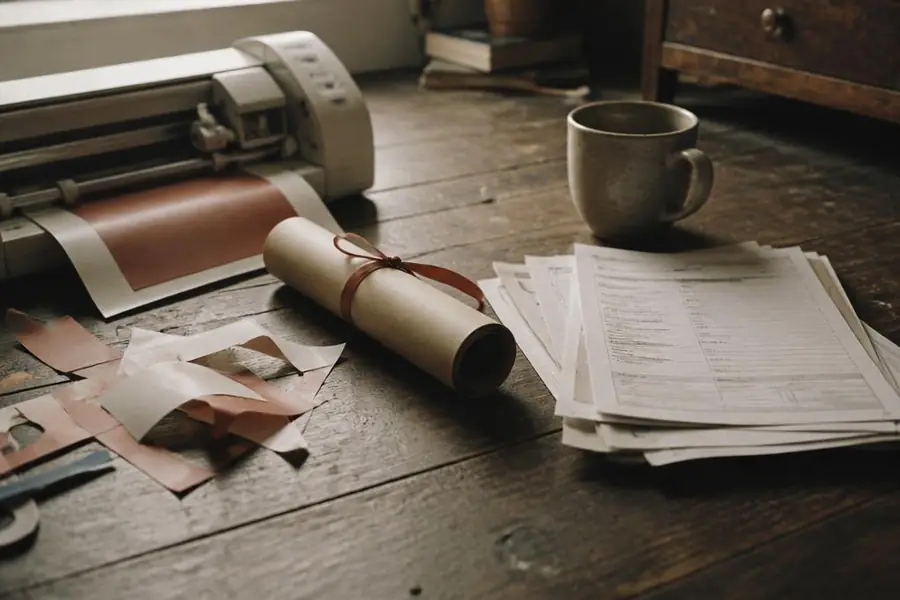
I signed up for a "Life Coach Certification" for $1,200 that taught me forty-seven ways to ask "how does that make you feel." I bought a Cricut and told myself I was launching an Etsy shop. I made three mugs. They said "Boss Babe." I wanted to throw them at the wall. I applied to 23 jobs on LinkedIn and got two automated rejections and twenty-one silences.
I told myself I wasn't tech-savvy. I told myself the window had closed. I told myself if I just stayed quiet and worked harder, someone would finally notice me.
I didn't know it yet, but the universe doesn't reward silence. It rewards alignment.
It was a Tuesday. I'd agreed to chaperone my daughter's field trip to the Sakura Japanese Cultural Center. I almost didn't go... I was exhausted... but Emma looked at me with the eyes that still believed I was capable of magic, and I went.
That's where I met Yuki Tanaka.
Seventy-three years old. Silk indigo kimono, cranes mid-flight across the fabric. Small hands that moved like she was conducting an orchestra. She was demonstrating the Japanese tea ceremony, chadō, and I was the only parent actually watching. Everyone else was near the snack table on their phones.
When the demonstration ended, I stayed. I couldn't stop looking at the tea bowl in her hands. Ancient. Cracked. Impossibly beautiful.
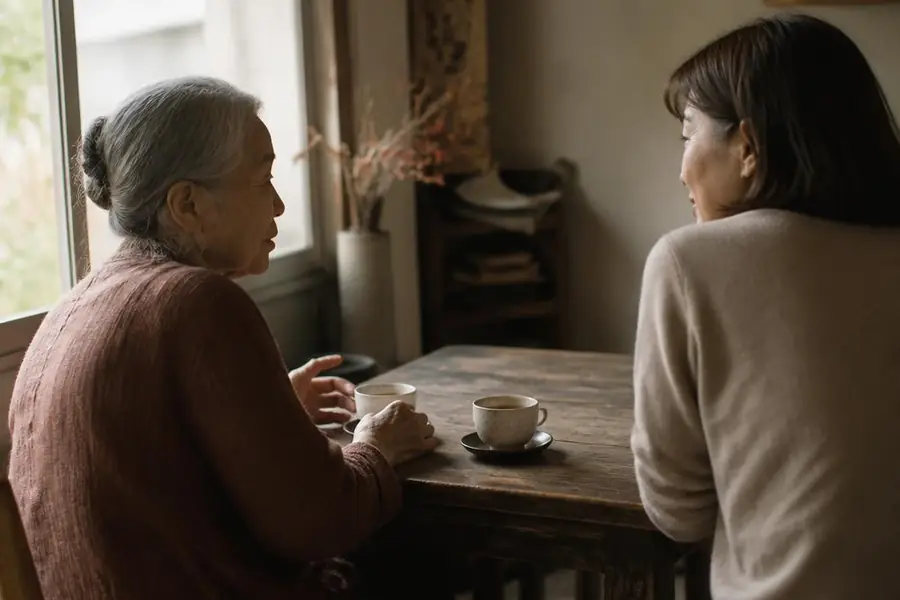
"You're holding your breath," she said. Her accent was soft, her English exact.
I exhaled. I hadn't realized I was doing it.
"You are waiting," she said, "for permission. For someone to say, 'It is your turn now.'"
I laughed, but it came out as a cough. "I'm forty-seven. I think my turn got canceled."
She set the bowl down and looked at me... not with pity, but with the kind of seeing that makes you feel naked and grateful at once.

"In Tokyo, I was a shokunin. A master craftswoman. For forty years I repaired pottery. Not with glue. With gold. That type of pottery is called Kintsugi."
She turned the bowl. The cracks were filled with veins of gold, catching the light.
"American women," she said, "come to me and say, 'I am broken. I started too late. I chose wrong. I am too old to be remade.' They do not understand. The break is not the end of the story. The break is where the gold goes."
"I don't know how to be gold," I said. "I don't even know what I'm supposed to be."
"That is because you have been asking the wrong question. You ask, 'What job can I get?' You should ask, 'What container fits my nature?'" She poured tea I hadn't asked for. "A teacup is not a vase. A vase is not a bowl. Each has a shape that fits a purpose. For nineteen years, you have been pouring yourself into a container that was never your shape. No wonder you feel anxious."
The words hit my chest like a tuning fork.
You are not broken, Sarah. You are only misplaced.
"You think you need to become someone new," she said. "But you are not broken, Sarah. You are only misplaced. You have spent your whole life organizing other people's chaos because your nature is to create order... but you have been doing it in a place that treats order as invisible. You must find where your order is appreciated. Where your nature is valued, not the background noise."
She set down the teapot. "Ninety days. No more shrinking. No more waiting for permission. No more pouring yourself into cups that don't fit. You discover your shape. You stop asking 'what job will have me?' and start asking 'what was I actually built for?' You become the bowl. Not the water."
I was terrified. Saying yes to self-discovery felt like saying yes to freefall. But I was also out of other options.
I handed her what little cash I had... not for her, but as a commitment to myself. "I'll do it," I said. There was no going back after that.
The first thing that came to mind was building websites for local business with AI from what Priya told me. I wasn't that tech savvy but I was also worried after hearing so much news about ai replacing a lot of jobs... I felt like I had no other choice but to really start leaning into it and learning something new. It didn't take long for me to realize just how lost, confused, and alone I felt when starting something new.
Brad called me into a conference room that smelled like whiteboard marker. HR was already sitting there, folder open, tissue box positioned at a helpful angle. "Training your replacement" had never meant training. It had meant handing Chloe the keys while I finished out the paperwork. Today was the paperwork.
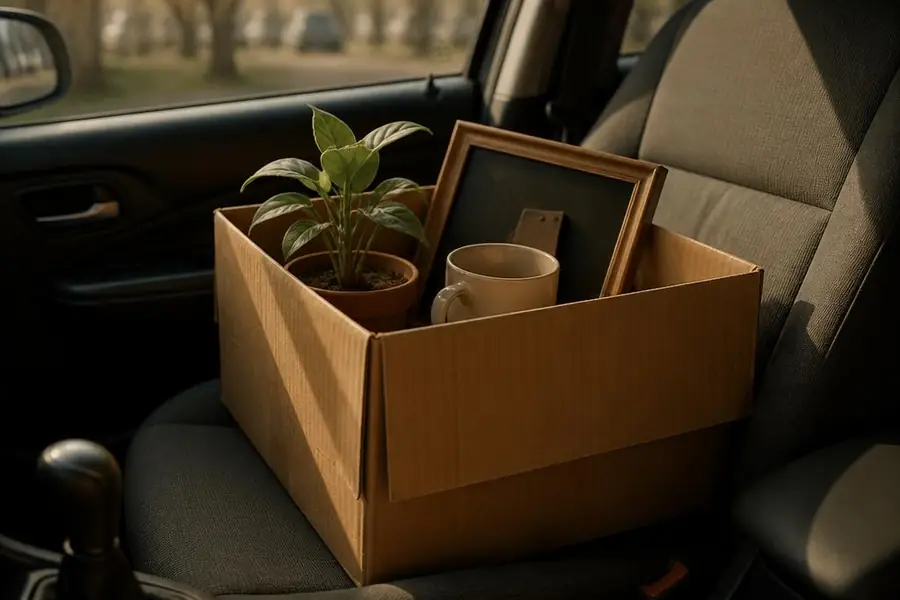
No severance to speak of. Two weeks of health insurance runway. A cardboard box with my desk plant and a stapler I apparently owned. I carried it to the Civic in the same parking garage from three months earlier, and I sat there again, except this time there was no job to go back up to. The math was brutal and simple: ninety days, a mortgage, a daughter's braces, and zero income.
I had ninety days. I also now had nothing to fall back on. I did it anyway.
The next ninety days were the hardest emotional work I'd ever done, and I barely touched a spreadsheet.
I was stuck on what local business I should reach out to first. And I was also career confused and wondering who I actually wanted to be and what do I actually love doing before losing my self to the years of people pleasing and focusing on everyone else's needs but my own.
I confronted the negative thoughts in my head: I'm too old. I'm not creative. I need a degree. I can't start over. I should be grateful. Other women have it worse. Who am I to want more?
What I came down to was a simple mission that I needed to focus on instead over complicating everything: find one small business I love, and make its online presence match how good it actually is.
I sat down at 11 p.m. with a laptop, three tabs open, and a growing panic in my chest. I'd picked an AI website builder because it promised "no code, just describe what you want." I typed a sentence. It gave me back something that looked like a ransom note. I deleted it. I typed another sentence. I closed the laptop. I opened it again. I typed the word "help" into a search bar like that would summon someone.
I am fifty in three years. I don't understand any of this. This is a young person's game, and I am not a young person, I thought, and I meant it, and I almost quit right there, twelve days in, before I'd even really started.
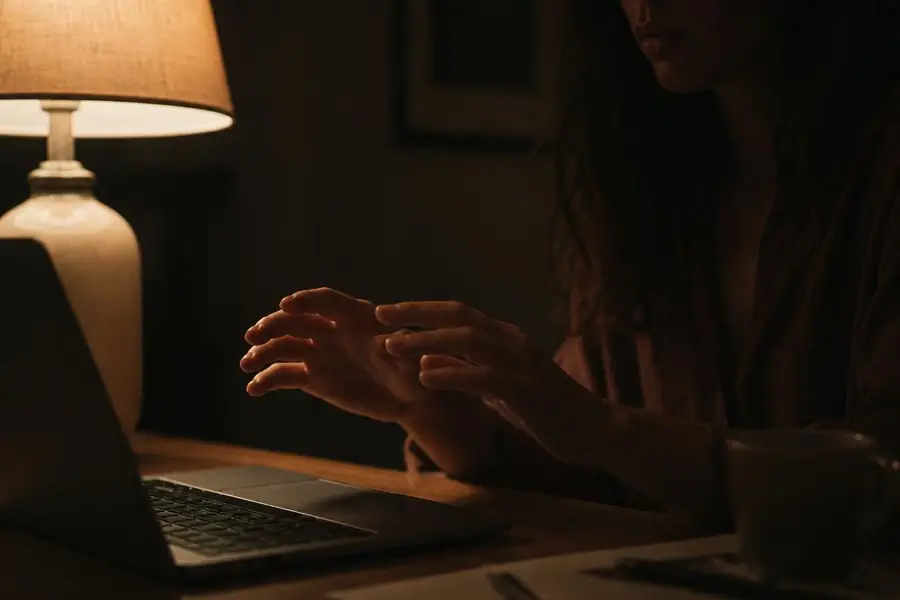
I didn't quit. I did something smaller and less dramatic: I went to bed, and in the morning I tried again, except this time instead of typing what I thought a "professional website" should sound like, I typed what I actually wanted to say to a customer walking in the door. The AI stopped fighting me. It turned out the tool wasn't the hard part. Trusting my own instincts was the hard part. I'd been doing that... having instincts other people trusted... for nineteen years. I'd just never once trusted them myself.
I never had more than a couple of hours some nights, after Emma went to bed and the dishes were done. That was enough. It had to be — that's all the time that I had.
Denise ran the flower shop two doors down from my old office. I'd bought carnations there for every office birthday for a decade. Her website was a single blurry photo and a phone number, last updated in 2019.
I offered to redo it for $150 and the promise that if she hated it, she owed me nothing. Three days later I handed her a real site... her hours, her delivery radius, photos that actually looked like her shop, a button that let people order without calling. She read it on her phone, standing behind the counter, and she looked up at me the way you look at someone who just did something you didn't know was possible.
"You built this?" she said. "You?"

"I built this," I said, and it was the first time in longer than I could remember that I'd said something true about myself out loud and felt bigger, not smaller, for saying it.
My mind was my biggest enemy though. The 2 a.m. voice that said, I'm being selfish that I'm going to fail and be humiliated. And the silence was sometimes impossible to bear. There were days where nothing happened, where I wondered if Yuki's wisdom was just pretty poetry from a woman who'd never had to choose between her daughter's braces and the electric bill.
My phone rang. It was Brad.
"Sarah, hey — so, things have been a little chaotic since you left." A pause, the kind he used to use before asking me to stay late. "Chloe's struggling. HR floated bringing you back. Operations Manager title, real one this time. Ten percent more than you were making."
Ten percent more than what I was making sounded amazing. And it seemed so much safer than my twenty-four day experiment where all I had to show for it was a $150 flower shop website while still having a mortgage due Friday. I told him I'd think about it. I sat with that offer in my head for two full days.
I called him back.
"I'm not coming back, Brad." My voice didn't shake. I noticed that first, before I noticed what I was actually saying. "And I need to tell you something. You used to call me 'kiddo.' I have a daughter in high school. You called what I did for nineteen years 'details stuff.' It kept that building running. It kept you running. I trained the woman who replaced me and then you guys just threw me out. I'm not angry anymore. I just needed to say it to you instead of to my steering wheel."
Brad was quiet for a second. "I didn't realize I made you feel that way."
"I know," I said. "That was the problem." Then I hung up, and I didn't shrink once.
On day 28, I went back to tell Yuki it wasn't working anyway. Flower shop or not, one client wasn't a business. I was going to quit and apply for another admin job.
Yuki wasn't there. On the table where she usually sat: a small cracked ceramic bowl, repaired in gold. And a note.
Sarah...
You are not broken. You are only misplaced. The bowl has a shape. But you must trust the search. The fit is coming.
Do not force yourself back into the wrong container now.
..Yuki
I held that bowl for ten minutes. Something in me finally turned over, quiet as a lock clicking. I kept on telling myself that I am "bad with computers." I realized I had to reframe that thought into something more empowering. So I started telling myself "I am not bad with computers," even though I didn't believe it. I kept on repeating it to myself as I drove home and finished the last piece of the work I'd been avoiding.
Emma found me at the kitchen table one night, laptop open, three browser tabs of a new AI tool I still didn't fully trust. "What are you doing, Mom?"
"Figuring out what kind of work fits me."
She touched the screen. "Like a puzzle?"
"Exactly like a puzzle."
She sat down next to me, not to help, just to be there, chin on her hand, watching me squint at a screen full of buttons I didn't understand yet. "I don't care if it works," she said, after a while. "I like watching you try things. You never used to try things."
I had spent nineteen years being loved, I think, for what I fixed. My daughter was sitting next to me loving me for absolutely nothing I had accomplished yet. I hadn't felt that in longer than I could name. I put my hand over hers on the table and we sat there in the quiet, and it was, without question, the best hour of the entire ninety days.
Two more small sites followed after Denise's — a dog groomer, a guy who fixed lawnmowers. Good work. Fair money. Nothing that felt like the bowl finding its shape yet. Just proof I wasn't a fluke.
Then day 67 happened, and everything moved at once.
I woke up to a text from a woman I'd met at a networking coffee three weeks earlier: "Sarah... I keep thinking about what you said about making client experiences feel welcoming. My website is a mess. Would you help me design the whole thing... not just pretty, like a journey?"
Then a Facebook message. Then an email. Then another text. By noon I had three discovery calls booked. By the end of the week, two more clients on top of Denise.
And throughout the process... I started learning more of who I actually was when I had something of my own I could focus on building.
A message came in from Dr. Reyes's office... the same orthodontist my Emma had been seeing since sixth grade, the same appointment I'd almost missed sitting in that parking garage back on page one of this story. Their office manager had seen Denise's flower shop site and wanted the same thing for the practice. A real project. Real money. A real dental office with real patients reading real reviews.
I almost said no. A flower shop that didn't work out was a $150 mistake. A dental practice that didn't work out was a mistake with my daughter's own orthodontist watching. Three small, quiet clients felt so much safer than one big, visible one where I could actually be found out.
I sat with the email unanswered for two days, telling myself I wasn't ready, telling myself small and safe was enough, telling myself the same lie I'd told myself at that laminate desk for nineteen years: this should be enough. It wasn't. I said yes.
The night before I was supposed to walk Dr. Reyes through the finished site, my laptop fan started screaming, the preview stopped loading, and the AI tool threw an error message I'd never seen before, over and over, no matter what I tried. Eleven forty p.m. Presentation at 9 a.m. Every fix I attempted made it worse.
I called the practice's after-hours line to buy myself an extra hour. I sat on the kitchen floor with my back against the cabinet, laptop on my knees, genuinely close to calling the whole thing off and telling Dr. Reyes I wasn't ready after all.
Emma came downstairs for water and found me there at midnight.
"Move over," she said, and took the laptop before I could explain. She'd spent a semester of computer class on exactly the kind of error I was staring at. Fifteen minutes, one cleared cache, and a setting I hadn't known existed, and the site loaded clean.
"See," she said, handing it back. "Puzzle." Then she went back to bed like it was nothing, and I sat there at midnight, sixteen years after I'd stopped believing anyone was coming to help me, being helped by the person I used to think I was protecting by staying invisible.
Dr. Reyes didn't just like the site. She cried a little, which surprised both of us, and said it finally looked like what the practice actually felt like when you walked in. Two of her patients booked consultations from the new site in the first week. She referred me to another dentist across town before I'd even sent the invoice. That one referral lead to a handful more. By the end of the month, I had replaced my admin salary from my kitchen table.
That's when I finally understood what Yuki meant by "container," and it wasn't what I'd assumed. It wasn't just about the "web design." Denise's flower shop had gone fine. The lawnmower guy had gone fine. But the dental office was the first time the work had felt effortless... because trust-based, detail-obsessed type of business was exactly where my nineteen years of quietly making other people feel safe and organized turned out to be worth something enormous.
Not every woman is built for the same client though. But for some reason, I was. It just wasn't the client I expected, and I never would have found it on my own — I needed to actually try the wrong-shaped container first to recognize the right one when it showed up in my inbox.
Finding my shape took ninety days of unlearning nineteen years of shrinking. Once I actually knew whose website I was building and why, the site itself was simple to make with AI.

My problem was never my ability to organize. It was my insistence on organizing myself into a life that didn't fit. Yuki didn't tell me to work harder. She told me to find my container. That was it. The tools were new... AI did in an afternoon what would've taken me a coding bootcamp I never would have signed up for. But the instinct underneath it was nineteen years old. That was the part nobody could have taught me in ninety days. I already had it. It was based off of my unique personality that had developed in that time.
I found out later what Yuki was talking about and simplified it into easy to start steps. Figure out your Client Attraction Archetype first. Find out your unique personality. And find out what specific type of local business matches that personality type.
That was it. And instead of overcomplicating everything. I would just focus on that.
I went back to the Cultural Center the next morning to thank her. Yuki was gone... back to Tokyo to care for her sister, the director told me. She'd left one more thing.
A miniature kintsugi bowl, no bigger than my palm, gold veins catching the morning light. And a note:
The lessons are not yours to hide. Help others.
-Yuki
I keep that bowl on my desk to this day.
The universe doesn't reward silence. It rewards alignment.
I think about the thousands of women sitting in cubicles right now who are doing more than they get credit for, who've watched someone less experienced get the opportunity they deserved, who sometimes worry their best working years are already behind them. Believing the problem is their age, their degree, their timing, their luck, or the fact that they've never written a line of code in their life.
It's not. The problem is misalignment. And the second problem is not knowing your niche that best fits your unique personality.
You don't need to shrink harder or be grateful for a container that was never yours. You don't need to be tech savvy or to learn to code — I'm still not that good with computers. All you need to do is figure out your Client Attraction Archetype and the specific kind of client who naturally fits that personality type.
That's the reason I built the assessment I'm about to hand you. It's not a career quiz from 1987. It's not a "what's your dream job" exercise. It's two minutes, and it will tell you exactly which of four personality types you naturally carry, and the specific kind of local business owner who is already looking for exactly that archetype. It will show you the niche that turns what got you overlooked into what makes you irreplaceable.
You don't need years feeling lost or stuck like I was. You just need to find your personality type.